China's capital — home to the Forbidden City, the Great Wall and traditional hutongs.
Beijing
China's capital — home to the Forbidden City, the Great Wall and traditional hutongs.
Map
Key data
Items shown in Chinese are kept from the original Chinese source; no English name is available yet.
| Provinces | Beijing |
|---|---|
| Geographic Zones | North China |
| Area | 16,410 km² |
| Population | 21.80 million |
| GDP | ¥5.21 trillion |
| Postal Code | 100000 |
| Area Code | 010 |
| License Plate | Beijing A–Q, Beijing Y |
| Admin code | 110000 |
| Climate | semi-humid and semi-arid warm-temperate monsoon |
| Location | North China, the northern North China Plain |
| Foreign name | Beijing Municipality, Beijing City, Peking City |
| Cities | 1 |
| 5A Scenic Spots | 9 |
Highlights
Introduction
- China's capital — home to the Forbidden City, the Great Wall and traditional hutongs.
History
- Beijing has a history of over 3,000 years as a city. During the Zhou Dynasty, the state of Ji established its capital here, and after the Qin and Han dynasties, successive dynasties often set up prefectures and commanderies in this area, hence ancient names such as Ji and Youzhou. The Jin, Yuan, Ming, and Qing dynasties all established their capitals here in succession. Yuan Dadu laid the foundation for today's urban layout, and structures such as the Ming and Qing Forbidden City, the Temple of Heaven, and the Great Wall survive to this day, becoming symbols of Chinese civilization. In modern times, Beijing has undergone many vicissitudes, and the Peking Man Site at Zhoukoudian traces the history of human activity back hundreds of thousands of years. Today, while preserving the character of a historic city, Beijing is facing the world with an open and inclusive attitude.
Culture
- Beijing has a profound traditional cultural heritage. Performing arts such as Peking opera, crosstalk, and pingshu storytelling flourish here, and the Beijing dialect and its rhythms have a unique charm. Siheyuan courtyards and hutongs form the distinctive residential culture of old Beijing, and the street performances of Tianqiao and the lively temple fairs continue to this day. Foods such as roast duck, mutton hot pot, and zhajiang noodles have a distinctive flavor, while intangible cultural heritage such as cloisonné, Beijing embroidery, and Lord Rabbit figurines are passed down from generation to generation. As an ancient capital of several hundred years, Beijing blends the finest of palace culture, scholar-official culture, and street culture, captivating countless foreign visitors.
Science & Technology
- Beijing is a national highland for scientific and technological innovation, home to many first-class universities such as Tsinghua University and Peking University, as well as national research institutions such as the Chinese Academy of Sciences. Zhongguancun, known as "China's Silicon Valley," has incubated a large number of leading internet and artificial intelligence companies. Beijing has achieved fruitful results in fields such as artificial intelligence, integrated circuits, biomedicine, and aerospace, with continuous breakthroughs in frontier technologies such as quantum computing and large models. Leveraging platforms such as the Capital International Exhibition Center and the China National Convention Center, Beijing continues to promote the exchange of scientific and technological achievements and international cooperation.
Economy
- In 2025, Beijing's GDP reached 5,207.34 billion yuan, ranking among the top cities nationwide. Beijing's economy is dominated by modern services, with finance, technology, cultural and creative industries, and information industries as its pillars, and features a pronounced headquarters economy. The China headquarters of many Fortune Global 500 companies are located in Beijing, and emerging industry clusters such as internet platforms, new energy vehicles, and artificial intelligence are thriving. Venues such as the Capital International Exhibition Center make Beijing an important convention and exhibition destination, while its two international airports and high-speed rail hubs support an economic reach extending across the country.
Popular Spots9
Summer Palace
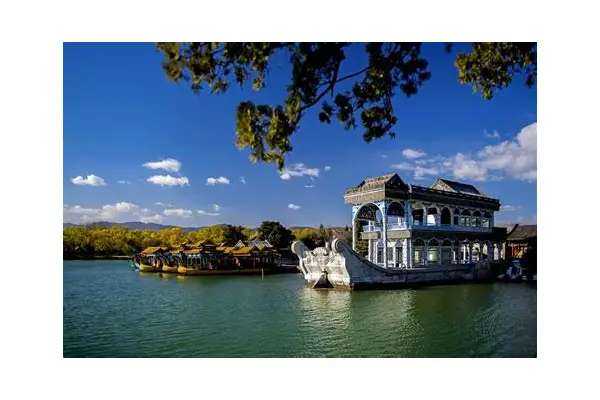
Summer Palace is a famous tourist attraction in Beijing, offering cultural h
Badaling Great Wall
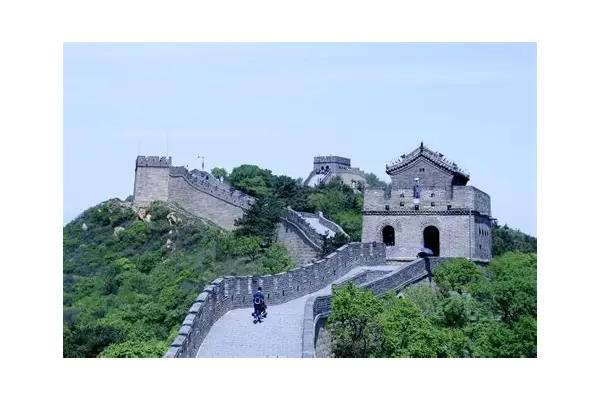
Badaling Great Wall is a famous tourist attraction in Beijing, offering cult
Prince Gong Mansion
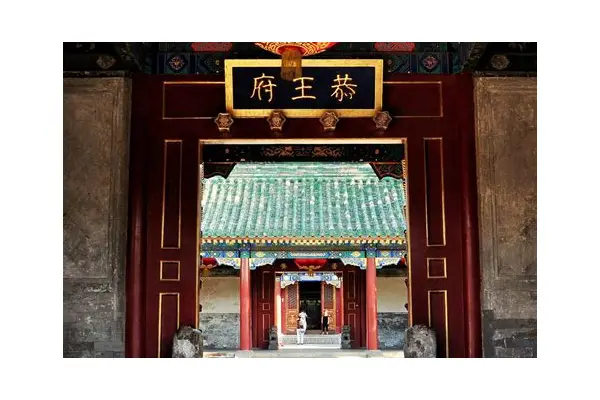
Prince Gong Mansion is a famous tourist attraction in Beijing, offering cult
Grand Canal Cultural Tourism Area (Tongzhou, Beijing)
Located in Tongzhou District of Beijing and elevated to national 5A in 2024,
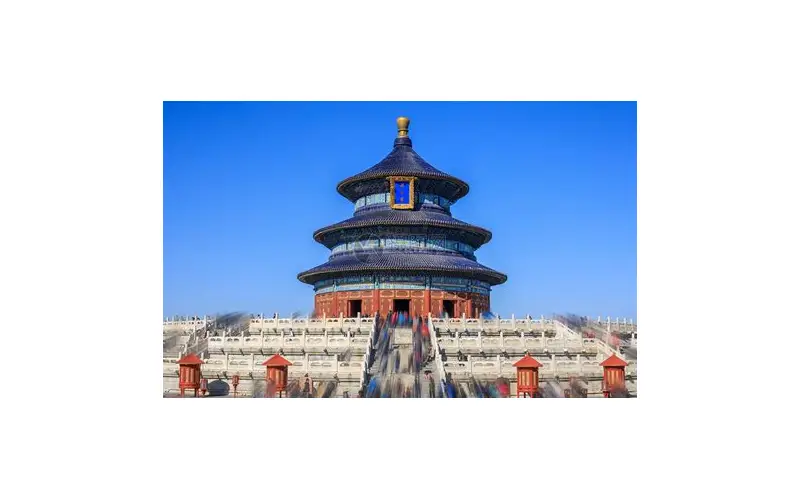
Temple of Heaven Park
Temple of Heaven Park is in Dongcheng District, Beijing, a national 5A touri
the Palace Museum
The Palace Museum is in Dongcheng District, Beijing, a national 5A tourist a
Old Summer Palace Ruins Park
The Old Summer Palace Ruins Park is in Haidian District, Beijing, and is a n
Beijing Olympic Park
Beijing Olympic Park is in Chaoyang District, Beijing, and is a national 5A
Ming Tombs
The Ming Tombs are in Changping District, Beijing, and are a national 5A tou