Eastern Qing Tombs is a famous tourist attraction in Hebei, offering cultural heritage. Ticket: ¥80. Rating: 4.8/5.
Eastern Qing Tombs
Eastern Qing Tombs is a famous tourist attraction in Hebei, offering cultural heritage. Ticket: …
🥇 5A Level ⭐ 4.8 🗺️ Hebei 🏙️ Tangshan 🏛️ Cultural
Spot Facts
| Level | 5A |
|---|---|
| Rating | 4.8 |
Practical Info
| Ticket | 80元 |
|---|---|
| Opening hours | 09:00—16:00 |
Eastern Qing Tombs Tour Guide
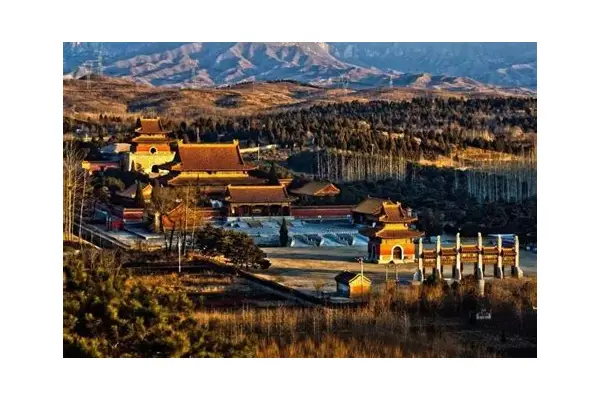
Real coordinates · smooth curved routeThe Eastern Qing Tombs lie at the southern foot of Changrui Mountain, northwest of Zunhua, Tangshan, Hebei. They are the largest and most complete imperial necropolis of the Qing dynasty, built over nearly three centuries and holding five emperors — Shunzhi, Kangxi, Qianlong, Xianfeng and Tongzhi — as well as empresses such as Cixi. Suggested route: Xiaoling (Shunzhi, the main tomb) sacred way → Xiaoling → Jingling (Kangxi) → Yuling (Qianlong) → Cixi's Ding Dongling.
⏳ Loading map…
-
Xiaoling Sacred WayStart · SightFrom the visitor center, head north onto the main spirit way, passing the stone archway, Great Red Gate, Shengde Shengong Stele Tower and stone statues, then through the Dragon and Phoenix Gate into the main tomb area. Why this route: the spirit way is the central axis of the Eastern Qing Tombs; the stone statues and archway gates embody Qing imperial tomb ritual, and seeing them first gives a quick overall sense of the layout.
-
Xiaoling (Shunzhi)about 2210 m (straight line) from the previous stop · Sight
-
Jingling (Kangxi)about 2210 m (straight line) from the previous stop · SightXiaoling is the tomb of the Shunzhi Emperor and the main tomb of the Eastern Qing Tombs; its Long'en Hall and Ming Tower are the most imposing. Then take the sightseeing bus east to Jingling (the Kangxi Emperor's tomb) to see its Shen'gong Shengde Stele and Danbi Stone. Why this route: Shunzhi established the tomb system and Kangxi laid the foundation of the Qing empire; comparing the two imperial tombs shows how early Qing tombs evolved from simple to grand.
-
Yuling (Qianlong)about 1430 m (straight line) from the previous stop · SightThe Yuling underground palace is famed for its white marble carvings; the tomb passage and vault ceiling are covered with Tibetan scriptures, mantras, and Buddha images, earning it the name Underground Buddhist Hall; the beams of the Long'en Hall above ground are made of nanmu wood. Why this route: The stone carvings of Yuling's underground palace are the pinnacle of Qing tomb art and are hailed as the must-see highlight of the Eastern Qing Tombs.
-
Cixi Ding Donglingabout 540 m (straight line) from the previous stop · SightAt Cixi's Dingdongling, the beams and pillars of the Long'en Hall are gilded, the Danbi Stone features a pierced-carved phoenix leading a dragon, and the white marble carvings of the underground palace are extremely lavish, forming a sharp contrast with the emperor's tombs. Why this route: The materials and craftsmanship of Cixi's tomb far exceed the regulations for empress tombs, making it the most talked-about stop at the Eastern Qing Tombs and a fitting finale.
Photos